The question I can't put down
Why do only some people evolve into a better identity?
Almost everyone wants a different life. Almost everyone knows what to do. And yet a small number of people actually become someone else — while the rest spend years rehearsing it. I write about that gap: the distance between who we say we are and who our week says we are, and what it actually takes to close it.
Launching October The Manual of Self-Leadership — a thirty-day practice in becoming the kind of person who no longer needs external accountability. Join the waitlist and the free audit comes first.
The argument
Nobody is short of intention. They're short of evidence.
We assume change fails for lack of motivation, discipline, or information. It doesn't. People who transform aren't the ones who wanted it most — they're the ones who stopped negotiating with the story they told about themselves.
Everyone keeps two records: what they say about themselves, and what they actually did. Change begins the day those two are placed side by side.
Most of what gets sold as self-improvement works on behaviour, which is the shallowest layer and the first to collapse. Underneath every stuck pattern is a payoff — something it protects you from — and a sentence you've been hiding behind. Name those and the behaviour stops needing willpower.
That's what I'm investigating: in the books, and in the essays.
The book
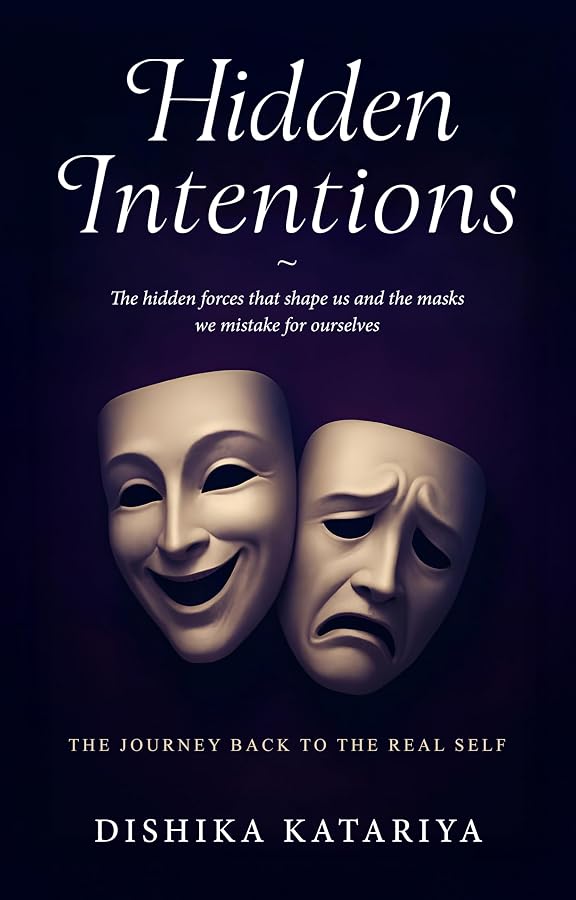
Hidden Intentions
On the masks we put on as children to survive — and go on wearing long after the danger has passed.
Why do we behave the way we do? Why do we cling to certain identities, expectations, or emotional patterns?
It's a book for people willing to look past their behaviour at the beliefs and conditioning underneath it. Once you realise you've been unaware of your own patterns, a quiet hunger opens up — and you don't get to un-see them afterwards.
Read Hidden Intentions Paperback and Kindle on Amazon
The playbook
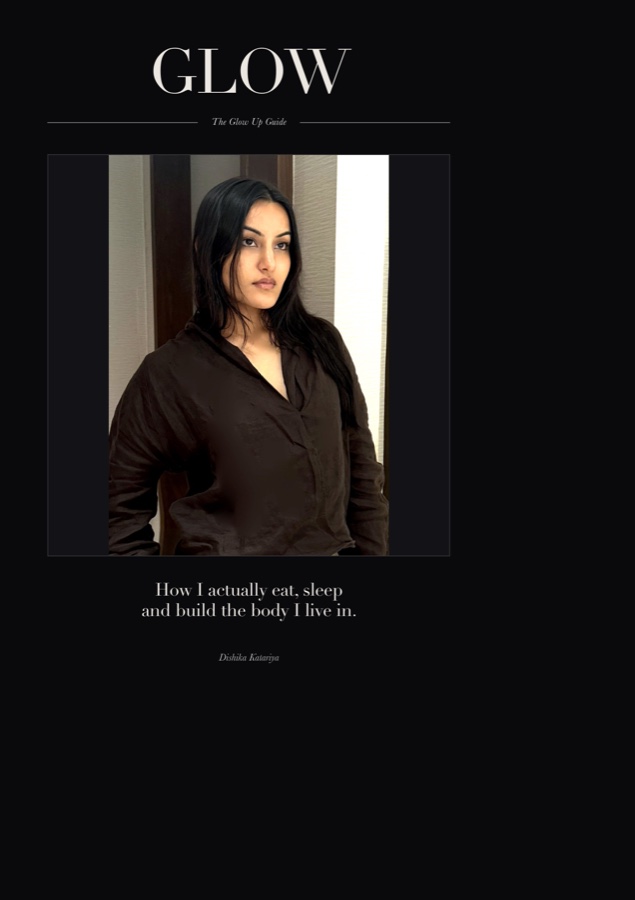
The Glow Up Playbook
How I actually eat, sleep and build the body I live in — and why none of it held before.
You were never lacking discipline. You were building on nothing.
I'm not a nutritionist and I don't claim to be. This is what worked: the food, the sleep, the light, the training — and the pattern underneath that decides whether any of it survives a hard week.
- The ten named patterns that end every plan you start
- How I eat — protein, fats, millets, sweetness, labels, cooking
- Sleep, skin, water, strength, blood sugar and your cycle
- Thirty days, and how not to lose it in week two
Also in the works
The Disciplines of High Agency Women
A guide to becoming the woman you respect, not tolerate. Subscribers hear about it first.
The course
Become the kind of person who no longer needs external accountability.
A 30-day system for understanding your patterns, changing your identity, and learning how to lead yourself.
The Manual of Self-LeadershipThe 30-Day Identity Shift System
It is not a thirty-day transformation, and I won't pretend otherwise. It is the cycle of change — and how to keep it moving without anyone supervising you.
Opens in
It's open. The Founder's Edition is live.
Free identity audit · Founder's price · First access
A look inside
The Identity Possibility Loop
The mechanism the whole system runs on. Who you believe you are decides what you notice. What you notice decides what you ask. What you ask decides what you do — and what you do becomes the evidence that changes who you believe you are.
Then it turns again, from a higher floor.
Day 5 · one of thirty
What is the pattern doing for you?
Stop asking "what's wrong with me?" Ask what the behaviour is doing for you. Avoidance may protect you from failure. Scrolling may protect you from silence. Chasing validation may protect you from having to validate yourself.
You cannot intelligently leave a behaviour you haven't understood.
The letter
Essays on why people actually change.
The patterns, the research, and the uncomfortable parts — written as I find them. No schedule I can't keep, and nothing I wouldn't want to read myself.
No spam. Unsubscribe whenever.
About

I am less interested in what people do and more interested in what makes them do it.
Why does one person change while another doesn't? Is it persistence, perspective, childhood, luck, or something else entirely?
That's the question I have been trying to answer. Every essay, book, and idea on this website is another attempt to understand what really changes a person.